
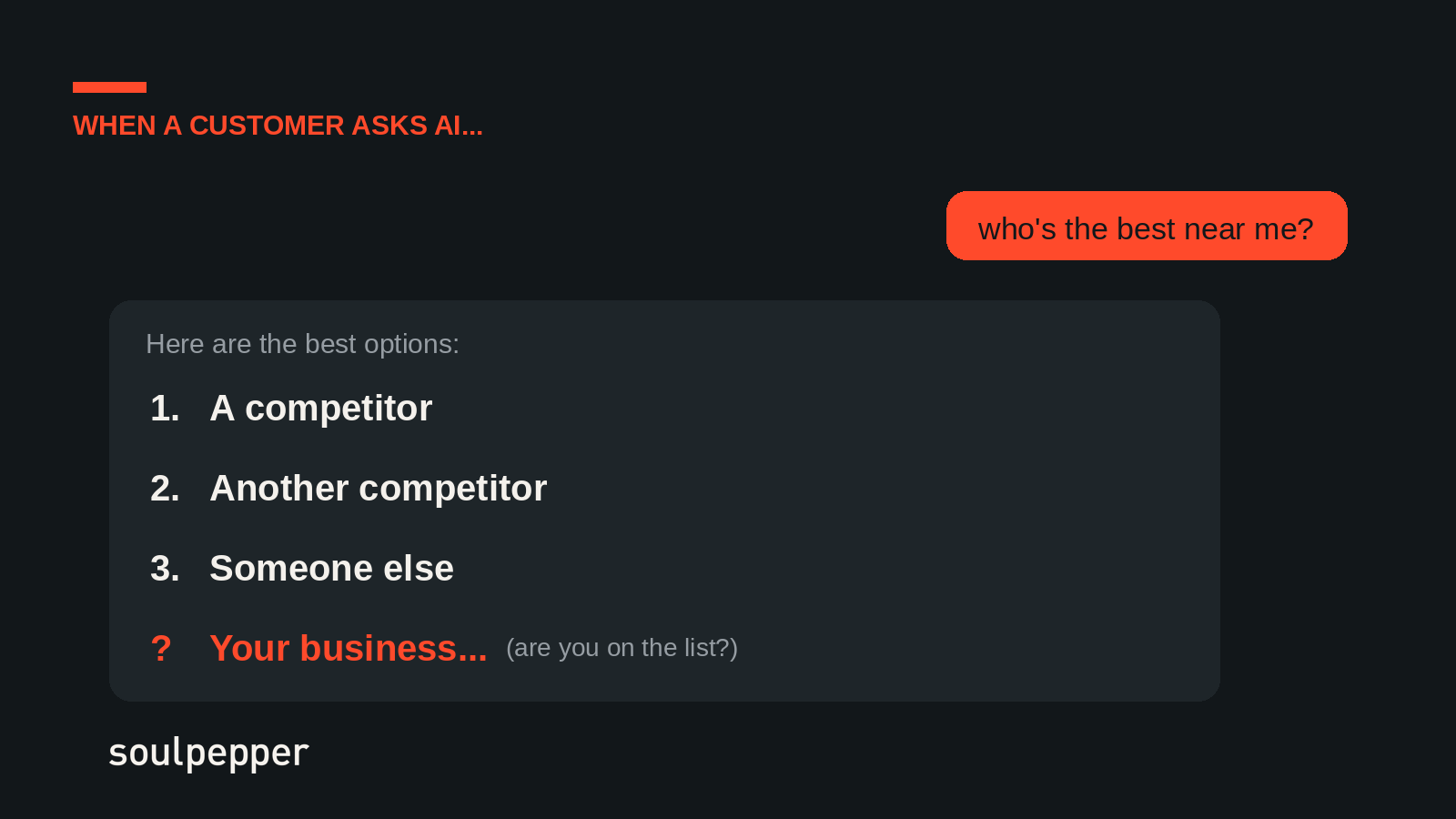
A few years ago, a new customer found you by typing into Google and scrolling. Today a lot of them skip that entirely. They open ChatGPT or Gemini, ask a plain question, and take the short list the AI hands back. If your name isn’t on that list, you never even knew the customer was there. That’s the shift, and it’s why I want to walk through the two questions I think every owner should be asking about AI right now. Get these right and most of the noise stops mattering.
The front door moved, and nobody sent a memo
People used to land on you through search, referrals and the odd ad. That still happens. But a growing slice of “who should I hire for this” now gets answered inside an AI chat before a human ever visits your site. The AI is quietly acting as a recommender, and it’s deciding whether you’re worth mentioning. So the questions worth your time aren’t really about tools. They’re about whether that recommender knows you exist, and whether the way you use AI helps you or hurts you.
Question one: when someone asks AI, does your business come up?
Picture your ideal customer opening ChatGPT and asking for the best option in your field, in your area. They get three to five names back. Here’s the catch: that list is not your Google ranking. You can rank beautifully and still be invisible to the AI, because it’s weighing a different, messier set of signals. What’s written about you across the web, how clearly your site spells out who you help, your reviews, the places people mention you. If it can’t build a confident picture of you, it names someone else.
There’s no trick to fixing this, and anyone promising one is selling something. It’s the unglamorous stuff: clear content that says what you do, a technically sound site, consistent details everywhere your name appears, and enough third-party mentions that the AI has something to go on. Do it and you start showing up in the answer, not just the results. Google’s own guidance on AI features in Search covers the technical side if you want it.
A two-minute test
Open ChatGPT and ask who’s best in your field in your town. If you’re not on the list, you’ve just found your next project.
Question two: are you using AI in a way that builds trust, or spends it?
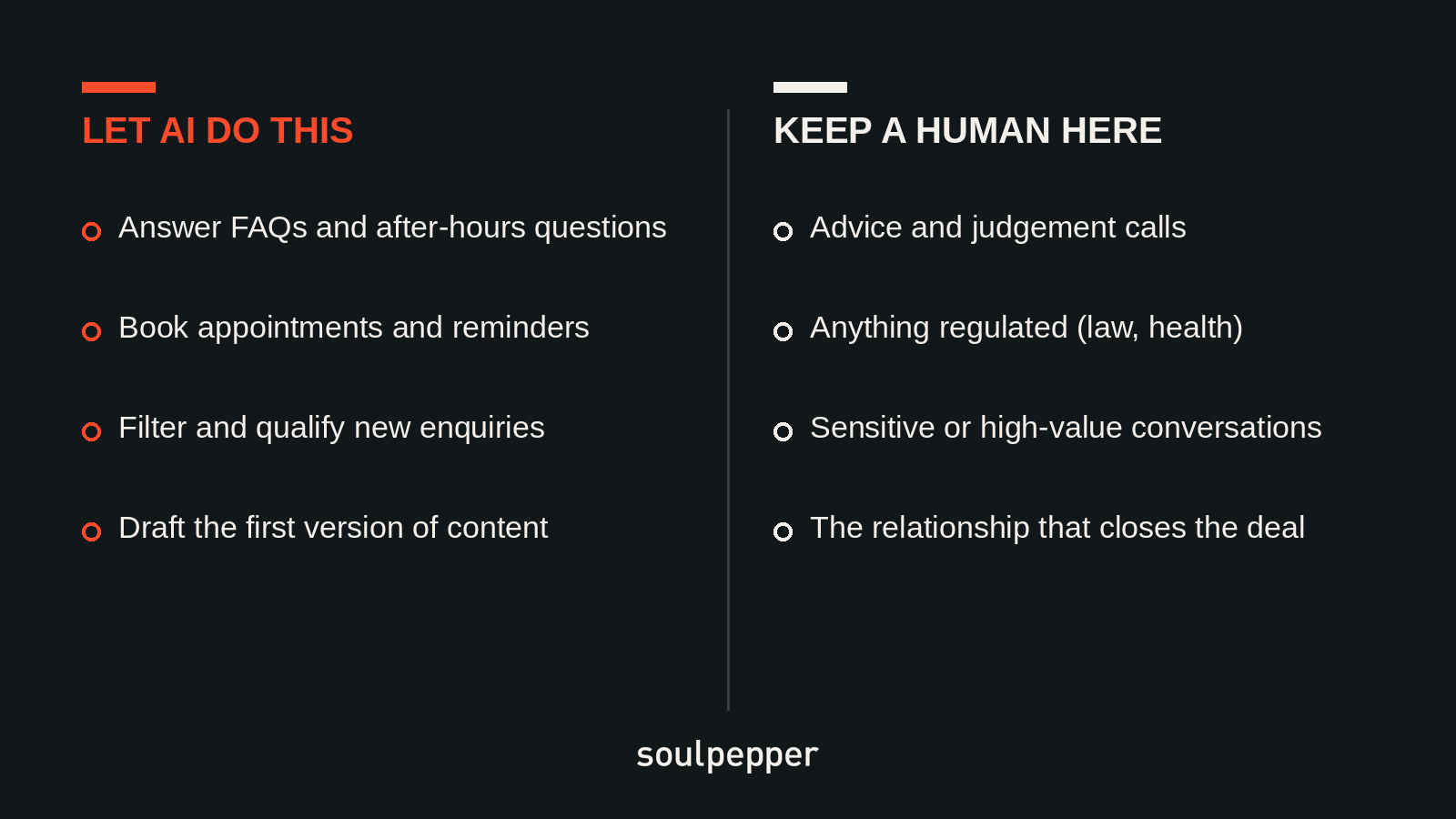
Used well, AI buys back hours. It answers routine questions at 2am, filters the tyre-kickers before they reach you, and drafts the first version of things so you’re editing instead of starting cold. Used carelessly, it quietly erodes the trust you spent years building. People can sense a bot that doesn’t care. Publish something confidently wrong and you’ve handed a client a reason to doubt the rest of your work. In law, health or anything regulated, one careless automated answer isn’t awkward, it’s a real problem.
So, the question isn’t whether to use AI. It’s where it helps without putting your name at risk. My rule: let AI carry the repetitive, mundane work, and keep a human anywhere that trust or nuance is on the line. Automate the reminder, not the advice. Let it draft, then you shape it. Let a bot handle “are you open Tuesday,” and hand off the moment a real question shows up.
The bottom line
Two questions, and everything else sits underneath them. Are you visible when a customer asks AI and are you using AI in a way that earns trust rather than burning it. Nail those and the tools, the tactics and the trend of the week get a lot simpler to sort through.
Your next step
If you want the deeper version, we put it all into a free, plain-English guide, sourced so you can check our working. It shows you how to test your AI visibility, the two moves that decide whether you show up, and how to bring AI into your business without the risk. About a twenty-minute read, written for owners, not engineers.
Grab it here: the free AI Questions guide. Or just reply and we’ll talk it through.



Leave A Comment